
If he were a plant, Will Frost would be a radicchio. Colorful, a little bitter and used in unique cuisine.
“But I’m not,” says the farmer and Colorado Farm and Art Market president. “I am a spinach plant. I’m gonna give you iron and minerals and make you regular. That’s my job here.”
CFAM began in 2004 with a group of community members devoted to Colorado-grown produce and supporting local growers and makers. Their vision: to create a meaningful, artful and food-focused gathering space in Colorado Springs. The founding farmers were committed to organic farming and regenerative agriculture principles.
Doug Wiley was one of those original members.
“We used to run a commercial dairy, and I did all the farming. The last thing I wanted to do was see people,” he says.
From a long line of farmers, Wiley sells raw milk, beef and pork, along with some produce on Larga Vista Ranch outside of Boone and east of Pueblo. At 65, his passion for farming remains intertwined with the families he’s grown up with and grown for, including many pregnant mothers and their children.
“Just knowing that these families are healthier and thriving because of the food we produce,” he says. “The time I’ve been doing this. It’s amazing how it’s grown.”
Farming has taught him perseverance; through drought, bankruptcy and countless other difficulties. For him, milking cows remains a joy.
“It’s a certain breed of people that are dairy farmers. I milk cows every day. I’ve done it since I was eight years old,” Wiley says.
Unlike other farmers markets, CFAM requires all its farmers to grow or raise their own products in Colorado. Artisans must make their own products. Resales and peddling are prohibited. CFAM is a cooperative farmers market, meaning its vendors own and operate it.
“That translates to a stronger commitment to transparency, quality and local sustainability,” says CFAM manager Sonya Zimmerman.
She and her husband, Dan, operate Good Steward Farms. The couple has been active in promoting local food within the community and working with advocacy groups including the Southeast Food Coalition to increase education and awareness of healthier eating.
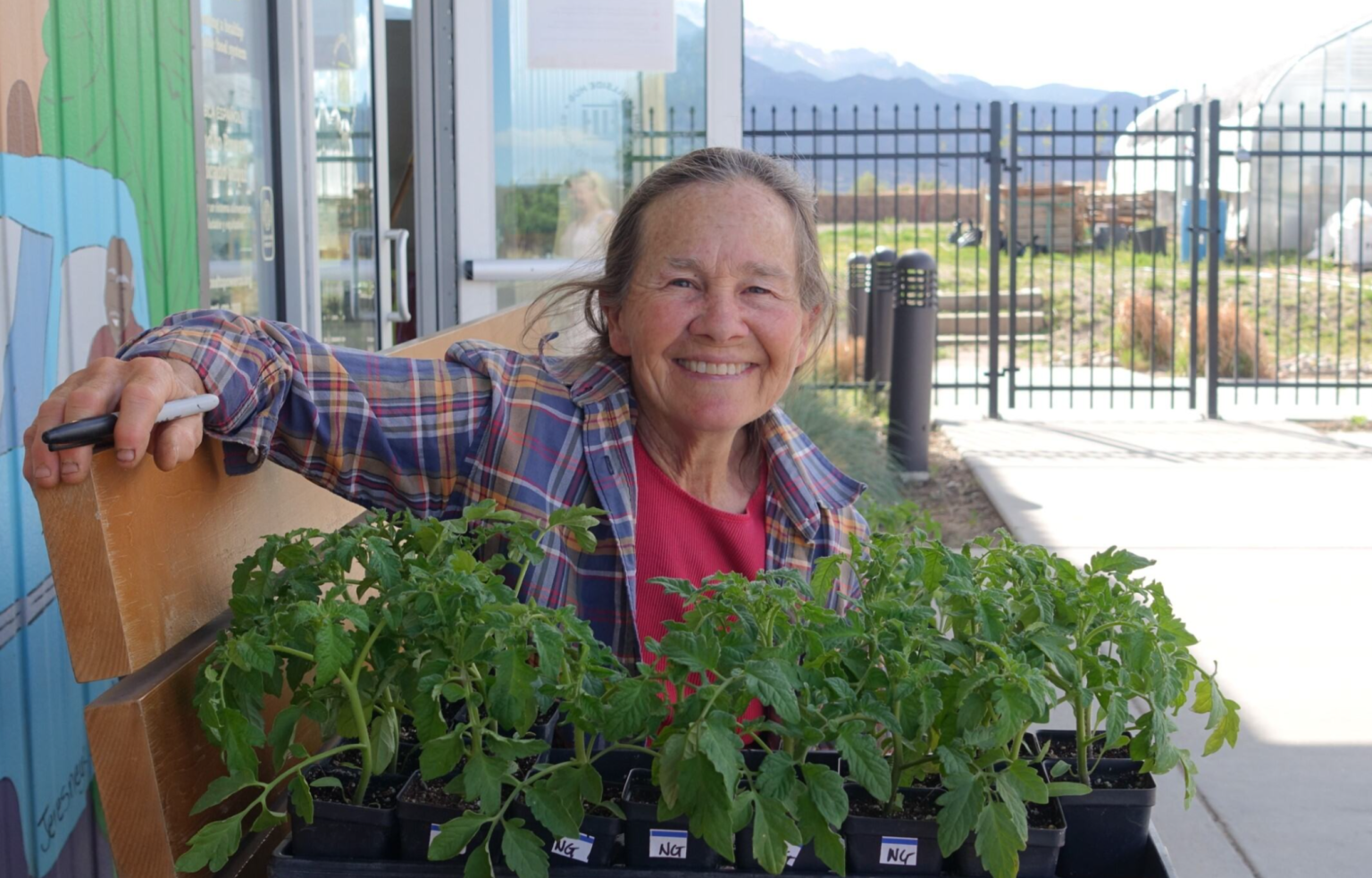
Susan Gordon of New Roots Farm in Cañon City did not come from a farming family. Her time as a social worker impressed upon her the importance of healthy systems, influencing her holistic approach to farming.
“Everything’s so interconnected and we’re so interdependent,” she says.
Like Wiley, her work was also influenced by families, including her own. She wanted to give her children the best food and regularly brought them to the farmers market.
“I wanted to engage them in working the land, planting seeds and being part of the process from seed to table,” she said.
Although many farmers have struggled to keep their college-educated children in the industry, for the brothers Frost, agriculture is all they could imagine themselves doing. Will and Sam Frost are fourth-generation farmers in Fountain who raise beef and lamb and grow organic produce.
During peak season, they work up to 100 hours a week to produce food for their community, a sacrifice easily lost on customers in the urban grocery store. With this sacrifice comes a deep love.
“We’ve been fortunate enough to find something that we really like to do,” says Sam.
For him, there’s a beauty that comes with working on the farm. Whether it’s finding new plant combinations that feed cattle and improve the soil or integrating financial considerations with environmental stewardship, a joyful creativity permeates his approach to farming.
“I can’t imagine having a different life. This is the only place that I’ve ever felt completely full, doing this stuff.
Will Frost, Frost Farms
For Will, farming has taught him patience, whether watching plants recover from a hailstorm or the unceasing experimenting, adapting and learning from one season to the next. His work is a daily reminder of how connected he is with his surroundings.
“Every success and every failure here is rewarding in some way. I get to see 12 to 15 different species of birds interacting in a natural environment every day. It’s the coolest thing I could imagine,” he says.
For its 22nd year, CFAM will host at a new downtown location on Wednesdays. This year’s farmers will also have Palisade peaches from the Western Slope (The Farmer’s Daughter) and melons of the Lower Arkansas Valley (Padilla Produce).
For many of the CFAM farmers, their support of local food systems not only counters today’s convenience-driven food culture, but comes with a profound understanding that how we grow our food and where it comes from impact our environment, health and our community.
And who doesn’t want to be regular?
Meanwhile Block
132 W. Cimarron St., Colorado Springs
Free parking in the Costilla Street lot