
Katharine Lee Bates boarded a train July 1, 1893, in Chicago bound for Colorado Springs. Bates, an English professor at Wellesley College, had accepted a three-week summer assignment at Colorado College. Born and raised in New England, she had never been West, and it’s easy to imagine her mesmerized as the train rolled through the farms and fields of the heartland.
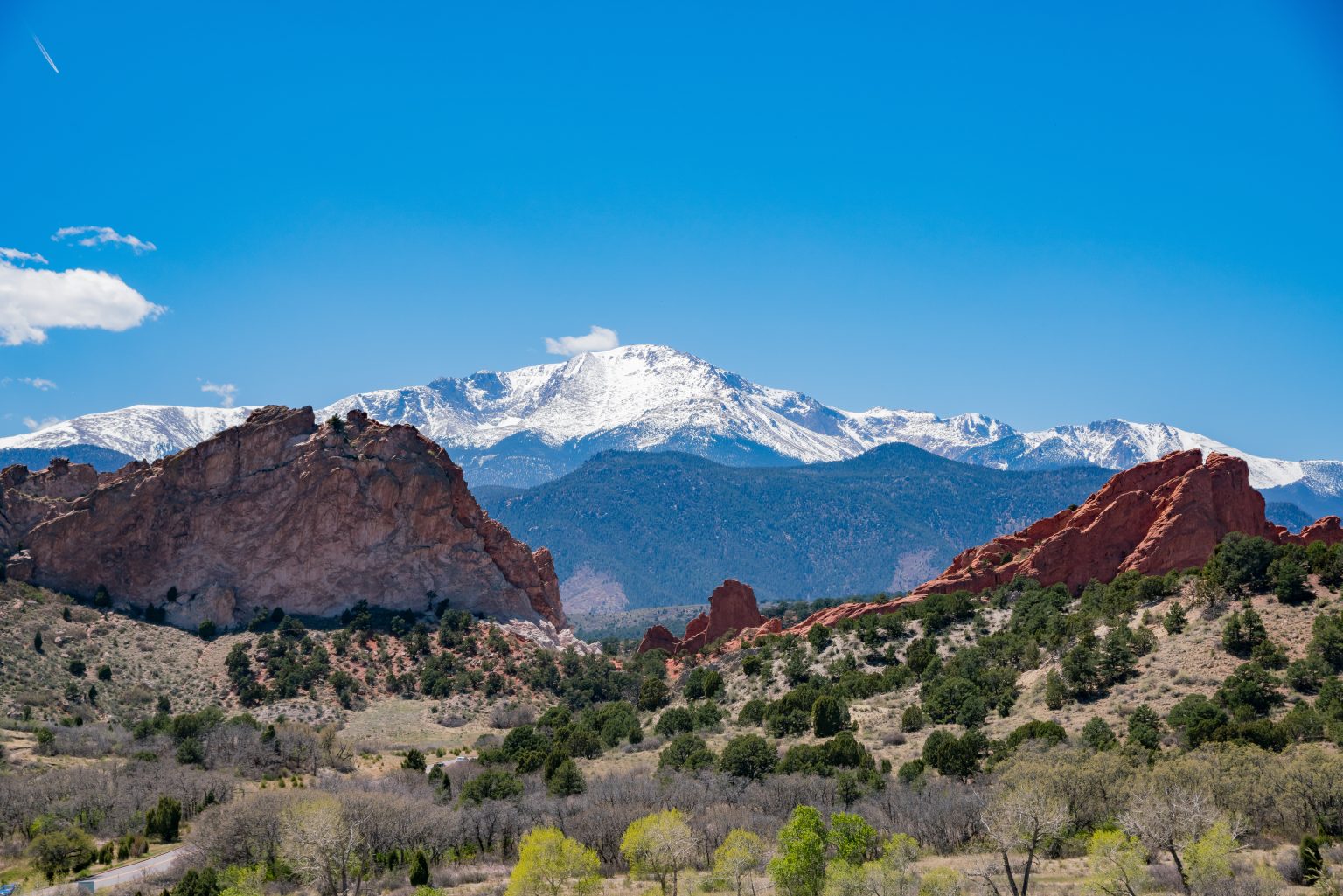
Bates taught two classes at Colorado College, and in her free time, she explored the area. She was awestruck by the scenery, especially Garden of the Gods, where she was delighted to hear a coyote howling one moonlit night.
On July 22, Bates and her fellow visiting professors were invited on a trip to the top of Pikes Peak. It was a long, rough journey in a horse- and mule-powered wagon. Bates wrote that she was very tired when they reached the summit, “but when I saw the view, I felt great joy. All the wonder of America seemed displayed there, with the sea-like expanse.”
That night, she wrote down a few verses that had sprung to mind as she witnessed the “most glorious scenery I ever beheld.”
Over the next year, Bates revised the poem, first published July 4, 1895, in The Congregationalist, a widely distributed church weekly. The poem was immediately popular, and several composers set the hymn-like stanzas to music.
In 1904, a Baptist clergyman paired Bates’ words with the chords and melody from a hymn that Samuel A. Ward had composed 10 years earlier. It proved to be the perfect marriage of lyrics and music. Bates continued to tweak the poem, publishing the version we know today in 1911, and it made her famous. Ward did not live to see the composition’s success. He died in 1903.
Colorado Springs Pioneers Museum; Lynn Sherr, America the Beautiful: The Stirring Story Behind the Nation’s Favorite Song