
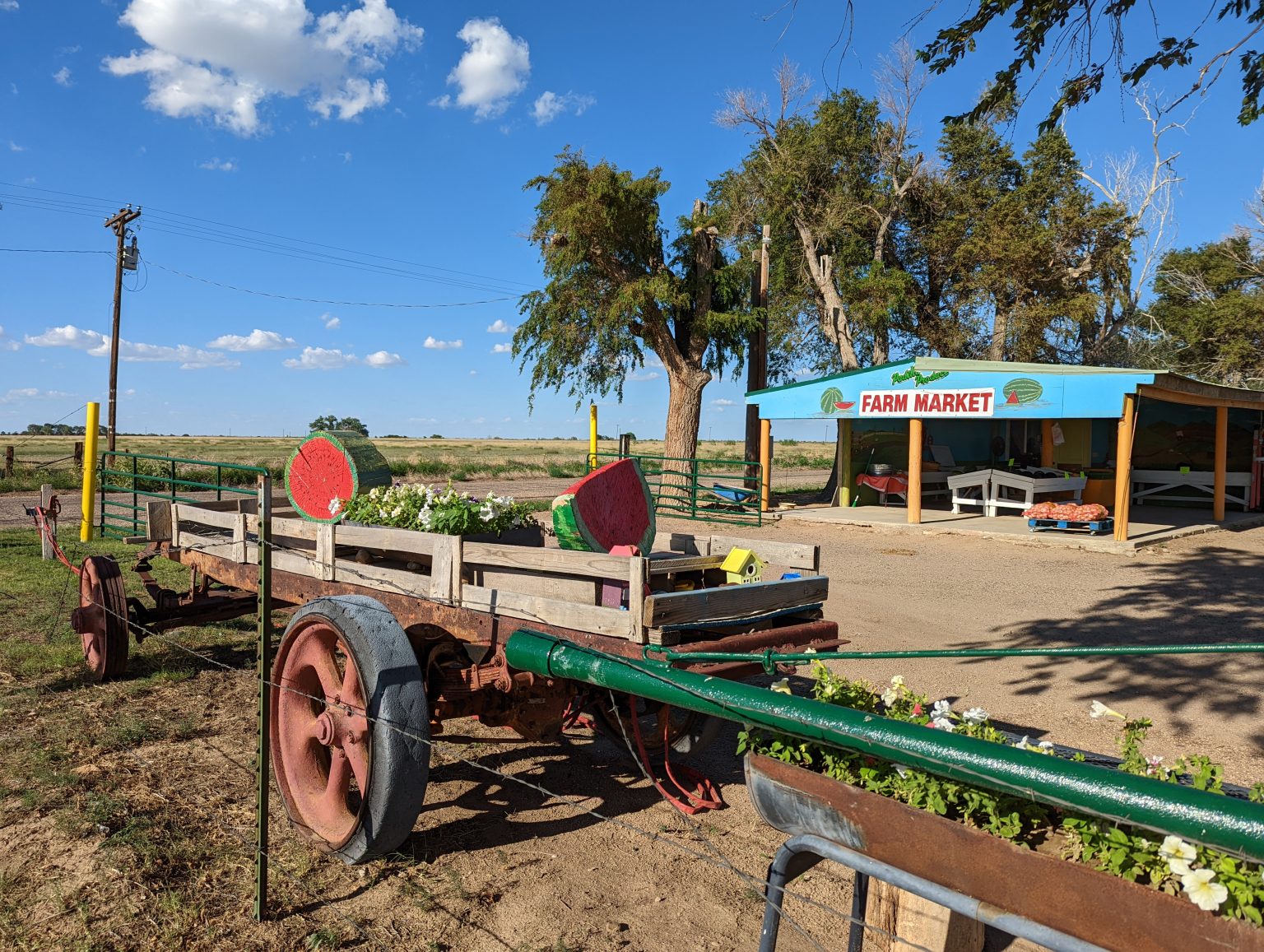
Crowley County in Southeast Colorado was once booming with agriculture, but over the past several decades, with urban growth, agricultural decline and loss of irrigated land, it has become one of the state’s poorest counties and a reference point for statewide discussions about water stewardship.
For siblings Rocio, Rosaura and Roberto Padilla, Crowley County is a place of hope and new beginnings. A family dream was born in Manzanola, where their parents emigrated from Mexico, built and established Padilla Produce. They all grew up on the farm, reaping the benefits of their family’s hard work and sacrifice, and so when their father, Felipe, died in 2020, they banded together to continue the family farm.

“My father started something that no one thought was possible for someone in his era and with his background to develop, which was an independent Hispanic-governed farm,” says Roberto Padilla. “We’re committing to grow quality food for our communities as best that we can for as long as we can, because that’s what we believe in.”
From labor shortages and an aging workforce to climate issues and the highly centralized food system that makes it difficult for small farms to access larger markets, today’s challenges in small-scale farming are daunting. Yet the Padillas are no strangers to adversity. Like many dedicated small-scale farmers, they’re used to hardship, managing constant risk and adapting to an ever-changing environment.
Rocio Padilla is an elementary school counselor in Colorado Springs and earned her master’s in counseling and human services. In the same way a seedling requires healthy soil, sun and water, she appreciates how a child requires a good environment to learn how to regulate emotions in a healthy way. Her work has also given her insight into the importance of nutrition and a heart to sell at local farmers markets in underserved areas like the Southeast Farmers Market.
“I think it’s important that we, as people who are in agriculture, partner with those communities because I believe they should have access to that produce, just as anybody else,” she said.
Her siblings live on the East Coast and are scientists in the biopharmaceutical industry. Their scientific backgrounds have helped them adapt practices that reduce water usage, enrich the soil and minimize synthetic inputs, balanced with economic and environmental constraints so that their produce remains accessible, particularly to the rural communities they want to serve.
As second-generation farmers, drawing from past experience is essential for the future. Rosaura Salinas-Padilla has used her background as a chemist to learn about agricultural science, which has given her a greater appreciation for her father and excitement about ways to improve the farm’s soil.
“We need some of my dad’s generational farming ways, but we also need to bring some of the newer ways,” she says.
Inheriting the farm brings its own set of challenges, which includes balancing their day jobs while managing around 30 acres of produce. The team, on average, consists of five to six people and also includes family members like their mom and uncles. Transitioning the farm to drip irrigation and shifting away from conventional farming practices has been a multi-year process.

“In this big world, just do good and be good.
Felipe Padilla, founder, Padilla Produce
Like all meaningful change, it is a process that requires the patience, perseverance and commitment ingrained by their parents and filtered through their father’s words of wisdom.
“That’s where we anchor ourselves,” says Rocio Padilla. “We want to do good for ourselves, our community and for other people in their journey of life.”
This year, Padilla Produce is growing several varieties of melons, as well as vegetables including onions, tomatoes, chiles, peppers, tomatillos and pumpkins. Harvest is estimated to begin in early August. Check padillaproduceinc.com for the latest information on additional markets.