
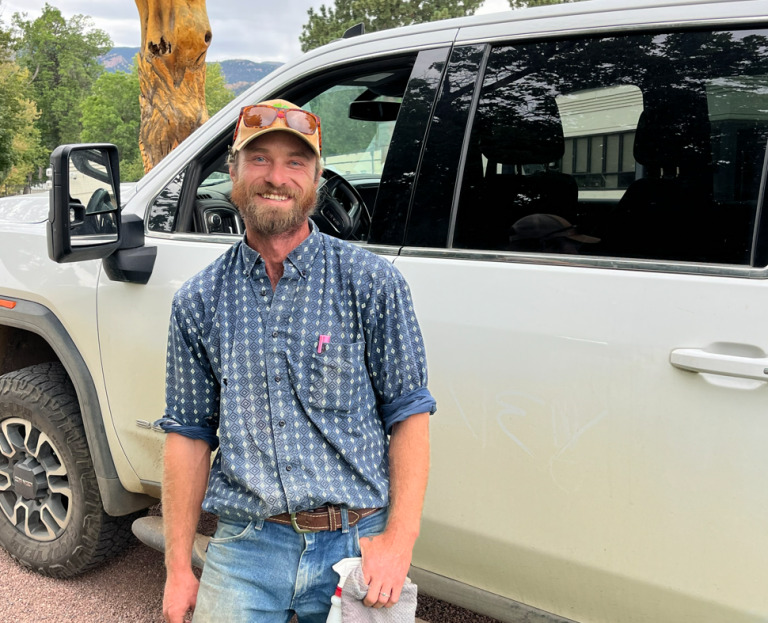
In the same way farming necessitates giving back to the land, Will Frost believes strongly in giving back to his community.
One Friday morning in Fountain, Will Frost and I harvest leeks to be delivered to families at the Colorado Springs School in the afternoon. In haste, I’ve pulled out a smaller one that could have used more time to grow. He smiles and takes it in stride.
“It’s not like we’re building pianos,” he says.
For Frost, farming is saturated with similes and metaphors; it’s poetry in motion and a way of life. It wasn’t always that way.
“I wanted to have a normal kid life. Hang out in the summers, do whatever I wanted, play sports. Growing up, there was an expectation, work, and responsibility that I didn’t quite understand. When I got into high school, I realized how unique and cool where we came from was.”
That burden became a privilege, a unique skill set and a source of pride. He would invite his friends to help on the farm and at farmers’ markets. Frost hails from a family of farmers. An uncle, Kirk Hanna, was known for his holistic ranching practices and conservation efforts. His father, Jay Frost, helped found the Colorado Farm and Art Market.
Frost went to college to study geology, but it didn’t fit him. After a year, he returned home where he learned vegetable farming from his father and aunt. Running three markets a week, he got into the weeds of vegetable growing. After completing his bachelor’s in creative writing, he pursued an MFA in poetry at the University of Montana, but when the program lost its funding, Frost found work in landscaping while staying connected to the local food and farming scene.
“I’d get caught up in my head about always wanting to do a good thing but never really knowing how to do that, and so food production just seemed like a natural way to get into it,” he says.
In farming, he could grow something useful but not superfluous. It was a way to help society without having to step on anyone’s toes. He returned to Fountain in 2021 to help run the farm, alongside his brother Sam, and head up the non-certified organic vegetable operation.
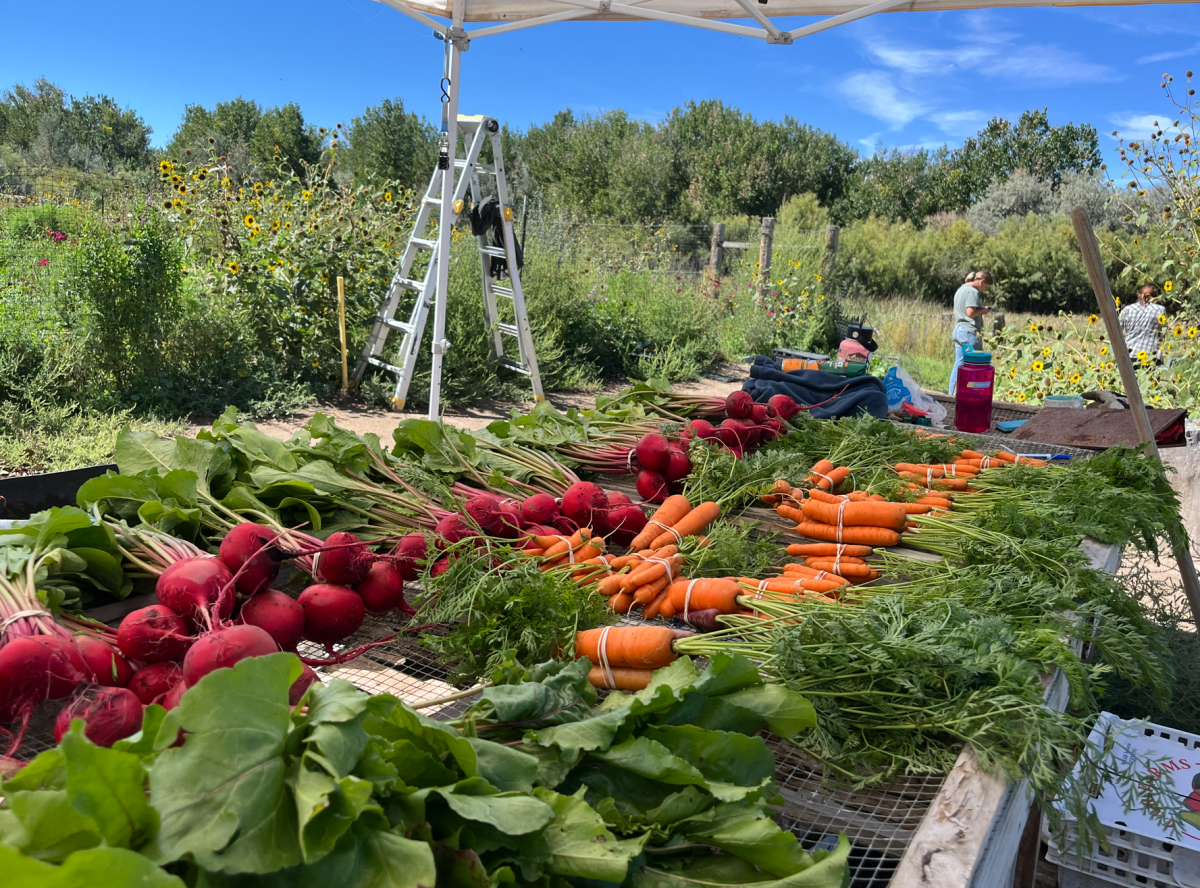
For Frost, the land is a piece of heaven, where animals graze, fly and roam, and the creek flows; where everything is connected, and nothing is too small to be ignored. Farming is a calling for him, where growth is sought above and below ground, resources are shared and the reward is his community’s nourishment.
In the relationship between nature and farmers, both may stumble but, in the end, must work together to bear fruit.
“There’s an art to agriculture and you’ve always got to remember that.”
Will Frost
For Frost, it was easy in the beginning to get caught up running a business, micromanaging everything and heading for burnout. Nowadays, he approaches it like Wendell Berry’s poem, “Manifesto: The Mad Farmer Liberation Front.”
“We’re doing this thing that we have to do, that we’re good at, that is a good thing, but then you can’t just get lost in the sauce,” he says. “There’s an art to agriculture and you’ve always got to remember that.”
Indeed, the humanities have shaped Frost’s approach to farming.
“It really helped me appreciate all the little things that make the job worth it,” he says.
Whether it’s shifting the tarp to redirect water flow for flood irrigating, stopping to admire the color of the harlequin beetle or tasting the celery-like stalks of a giant chard, details enliven what is often arduous work.
For Frost, his efforts in agriculture center on community. He partners with the Sun Mountain Farm Club, which provides labor on local farms, and runs Community Supported Agriculture programs to help local schools fundraise. He provides produce for the yearly Green Box Arts Festival in Green Mountain Falls and contributes to local food insecurity organizations.
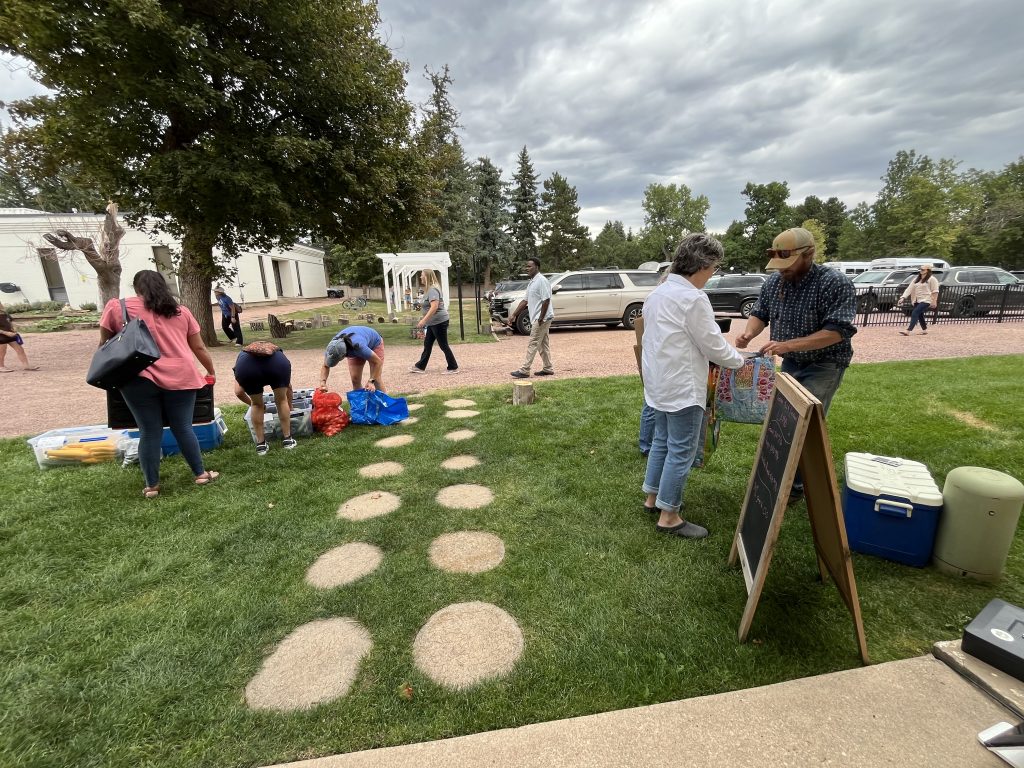
“I can’t take any credit for it, because all I was doing was trying to grow vegetables,” he says. “And then all of these other people in the community just started coming in, and all you had to do was say ‘yes,’ be open to it and be OK with not having full control over everything.”
Food system problems exist, as do issues surrounding water, climate and conservation. But for Frost, a path to meaningful change is just as crucial.
“We’re doing the work to try to slowly change the way that food is seen in America, but I think the more important thing is that there is this community being created around it.”
After another day of harvesting and distributing food, Frost puts all these things in perspective.
“Maybe something didn’t go perfectly but, at the end of the day, we got there, everybody was happy. We made connections on a human level, and we can go to sleep easy,” he says.