
A new cultural experience is taking shape along Pueblo’s Riverwalk, and when it opens in late spring 2026, organizers hope it will do more than draw visitors; they want it to spark curiosity, creativity and a sense of wonder for the entire community.
The Leonardo da Vinci Museum, the only permanent museum of its kind in North America, will celebrate the legendary Renaissance figure not just as an artist, but as an inventor, engineer, scientist and visionary. Designed as an immersive, interactive space, the museum aims to make art and innovation accessible to visitors of all ages.
“This isn’t a museum where you just walk through and look at things behind glass,” says Joe Arrigo, the museum’s founding director and president. “We want people to experience Leonardo’s ideas and imagination first-hand.”
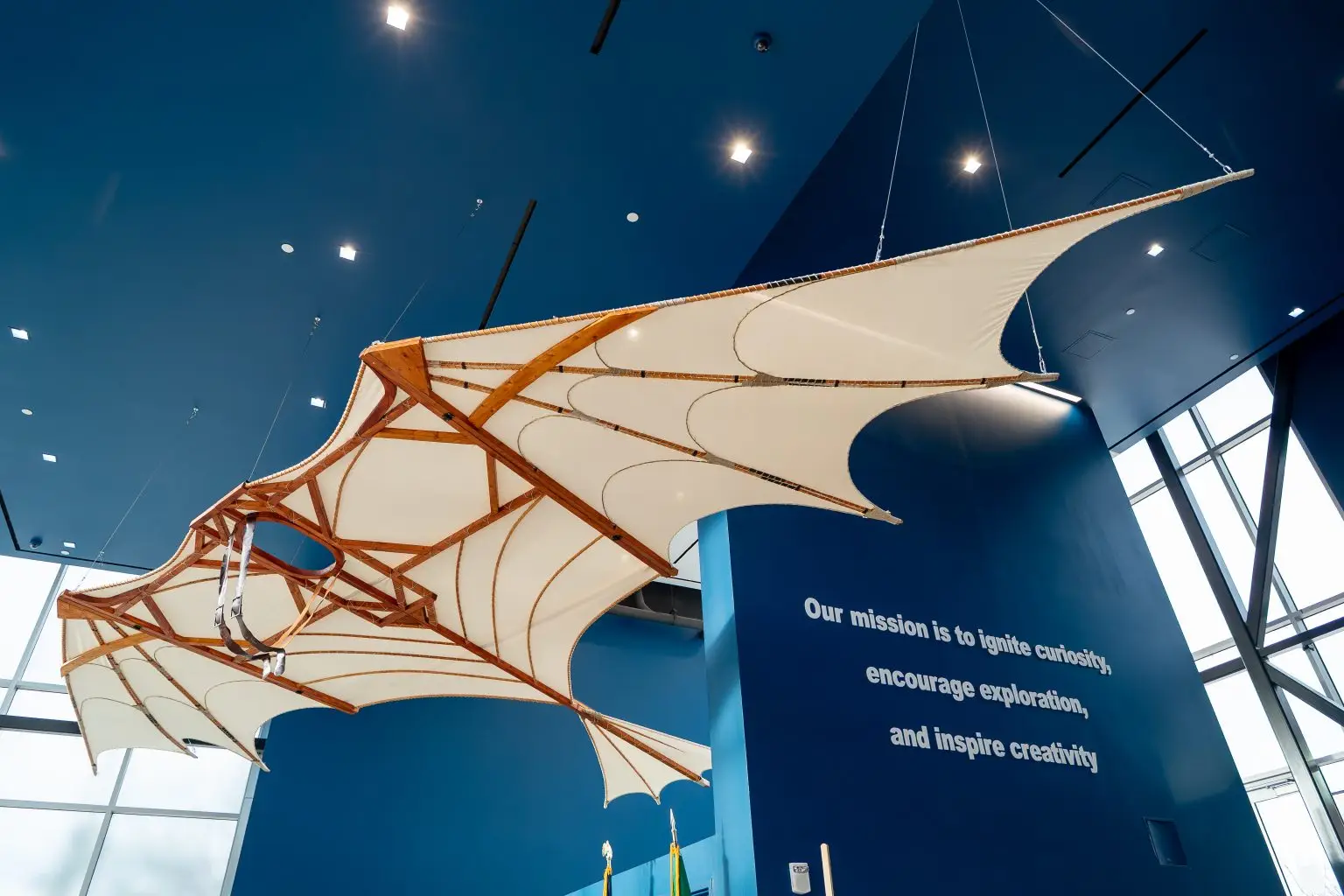
At the heart of the museum will be a collection of hand-built machines created by the Artisans of Florence, a group of Italian craftsmen who construct working models based on Leonardo’s original drawings. Many of these pieces typically are seen only in traveling international exhibits or European museums.
Visitors also will find a complete collection of Leonardo da Vinci’s codices, his notebooks filled with sketches, inventions and observations that reveal the mind of one of history’s greatest thinkers.


But the museum’s vision extends beyond Leonardo himself. Organizers are creating rotating exhibits that explore broader themes in art, science and history, from ancient Rome and Galileo to anatomy, flight and engineering. Because many of the machines and displays will rotate in and out through international partnerships, the experience will evolve over time.
“If you visit one year and come back the next, you’ll see something new. We want this to be a place people return to again and again,” says Craig Elliot Cisney, adviser for the Leonardo da Vinci Museum.
That focus on repeat experiences is reflected in the design for the space. Interactive rooms are planned for storytelling, where visitors may encounter historical figures such as Galileo, Einstein or even Leonardo himself. Other areas will feature hands-on learning environments, immersive projections and creative exploration zones for children and families.
Education is a major part of the museum’s mission, but the approach is rooted in creativity rather than traditional classroom learning. Art classes, workshops and performances are being developed to fill the gap left as many arts programs have been reduced in schools.
The goal is to create opportunities where art, science and imagination come together, often referred to as STEAM (science, technology, engineering, art and math). Organizers plan to seek sponsors to help cover materials costs, so programs will remain accessible to as many students as possible.
The location itself plays an important role in the experience. Situated at 310 Central Main St., Pueblo near the Riverwalk, the museum is part of a growing arts and cultural district that includes public murals, the Sangre de Cristo Arts Center, Pueblo Symphony performances and other creative spaces.
Organizers see the project as a natural extension of the city’s long-standing arts identity. “Pueblo has always had a strong arts community,” Arrigo said. “This gives us a chance to highlight that creativity while connecting it to something with global significance.”
From historic-style architectural details to large-scale hanging installations, the design team is working to create an atmosphere that feels experiential rather than static. Future additions may include dramatic centerpiece exhibits such as a full-scale replica of Leonardo’s armored tank and other large engineering works.
Ultimately, organizers say success won’t be measured only by attendance numbers, but by how the museum becomes part of daily life in Pueblo. “We want this to be a place where families come on the weekend, where students get inspired and where people feel proud to bring visitors,” Cisney said.
Information: davincisteam.org